

The Mountain and the Manger
A Tale of Two Kings
Only four miles separate Herod’s colossal palace from the village of Bethlehem. And consider this irony of geography: one was an artificial mountain housing the largest palace complex in the Roman world. The other was a lowly cave served as the birthplace for the King of Kings. Herod built high, desperate to be remembered, yet his monument lies in ruins. Jesus began low in utmost humility, yet His kingdom has no end.
“For the LORD of hosts has a day against all that is proud and lofty… against all the lofty mountains, and against all the uplifted hills”
Isaiah 2:12,14
~
The second day dawned, though we were slow to wake, lingering a while in the comfort of our beds. A simple breakfast of pita and eggs gave us the strength we needed for an adventure I don't think any of us truly anticipated. At a dusty and loud intersection, we found three men standing beside their taxis. After a bit of talk, we agreed upon a price of 100 shekels for a one-way journey to the gates of Herod’s palace about an hour away. As for how we might return? That was a question for another hour.


IN THE SHADOW OF PRIDE
Our driver led us through the winding backstreets of Hebron, and as we soon discovered, many of the gates had been barred by the authorities. Outside the city the landscape of this land became strikingly rugged as most houses are built directly into the steep faces of the hills, while the valleys below are filled with the toiled fruits of the people's labor. Eventually, we found our way onto the 356, which brought us at last to the foot of a great, conical mound.
It is a strange sight - an artificial bulwark born from the restless mind of Herod.
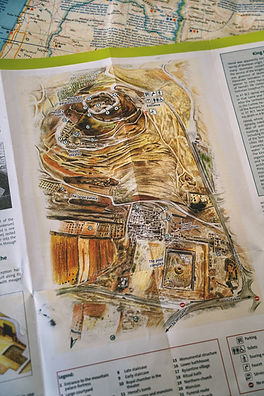
This is the Herodium. Among the numerous grand projects commissioned by Herod the Great, it is the only one he named after himself. The scale of the site is staggering, a palace divided into three huge parts: the mountain fortress, the rugged slopes, and the Lower Herodium complex. In its day, it stood as the largest palace in the entire Roman world.
Herod, it seems, was determined to not be forgotten.
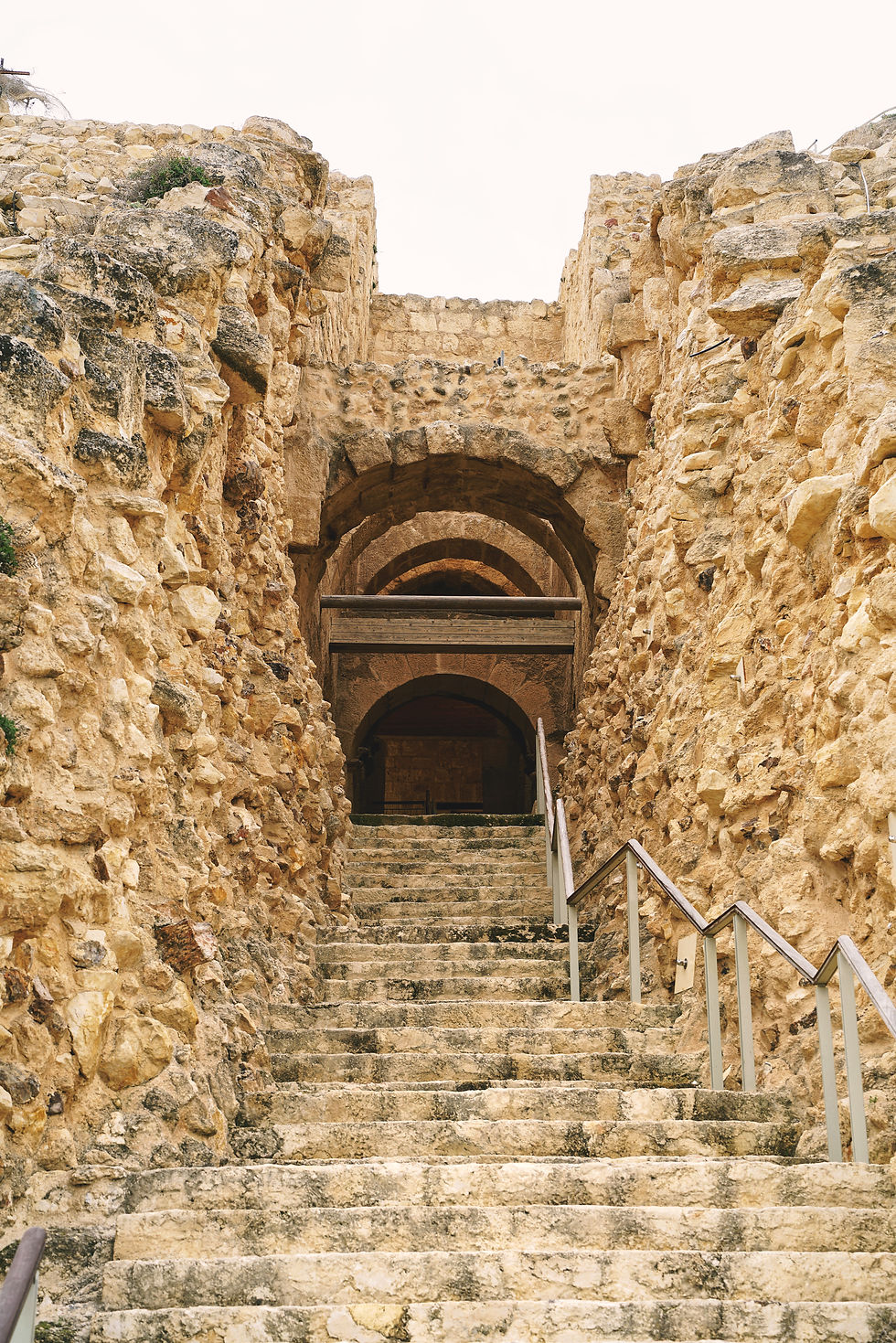
The site was quite empty when we arrived, with large gates guarding the path to the top. Herodium lies within full Israeli control, despite in the center of West Bank. We eventually reached the top, rising higher along earthen paths that snakes around the hill, until the ruins of the complex appeared before our eyes. The sight put us in mind of another of Herod's strongholds across the Dead Sea - the fortress of Machaerus in modern-day Jordan. Standing at these palaces, both then and now, the same consuming thought took hold of me: How was this built? It was born through unimaginable toil in some of the most unforgiving landscapes on earth. Countless tons of earth were moved and shaped by human hands, but to what end?
As we dived deeper into this site, and delved, quite literally, into its depths, I began to realize a startling reality, one that has stayed with me to this day…
A MAD KING
We thoroughly enjoyed exploring the hidden chambers and ruined walls of this site, but it was when we found narrow stairs that led deep into the artificial mound did this site go to legendary status. We had come here knowing little of its history, which I believe was to our benefit; we were quite unprepared for the story of its deliberate demise.
The stairs gave way to a steep earthen path that led through underground chambers, where the artificial fill now delved into the solid bedrock of its foundation. Zion, unleashing his Indiana Jones, was at his absolute happiest since we’ve arrived in the Holy Land. Eventually a glint of light entered until we came out, further below than we we first entered at the visitor center. Eventually, a glint of light broke the darkness, and we emerged further down the slope. There, before us lay an intimately-sized Roman theater, its stone seats overlooking a horizon where Bethlehem and Jerusalem sat.
A worker approached us and asked if we would like to see a series of films, projected directly onto the original murals within a private royal box above the theater. These films recounted the story of the palace and its deliberate destruction.
Deliberate.


You see, Herod’s mind grew dark and restless in his old age. As death approached, he became obsessed with his final resting place. In an act of unparalleled vanity, he ordered his magnificent palace to be buried alive. He commanded his workers to cover the entire structure in earth, turning his home into a massive, artificial funerary monument to himself. He wanted a mountain for a tomb, a landmark that would dominate the landscape for eternity.
But why would Herod resort to such pettiness? Why bury the very beauty he spent a lifetime creating? Perhaps was it a response to the whispers of a new King born a few miles down the road, a King whose kingdom would not be built of stone and dirt, but of something far more enduring?
THE HUMBLE KING
We made our way back down the slopes of the Herodium along the winding snake path, passed through the gate, and walked toward a nearby roundabout. Crossing the street, we waited on a small road that stretched another six kilometers toward Bethlehem. With no other way to get there, we pointed our fingers toward the ground (the common sign for hitchhiking in this land).
The very first car that passed stopped for us. An elderly man rolled down his window, and when we said “Bethlehem,” he smiled and told us to hop in. In broken English, he explained that he was heading to his daughter’s home just outside the city and could take us part of the way. From there, he said, we could either walk or catch a bus.


It might sound reckless to hitchhike in Palestine, especially when the news so often paints the region as a place of danger, but we felt completely safe. The people we encountered were warm and welcoming; the thought of peril never even crossed our minds. When we arrived at his destination, we flagged down a yellow bus that carried us into the heart of Bethlehem, arriving at the central square.
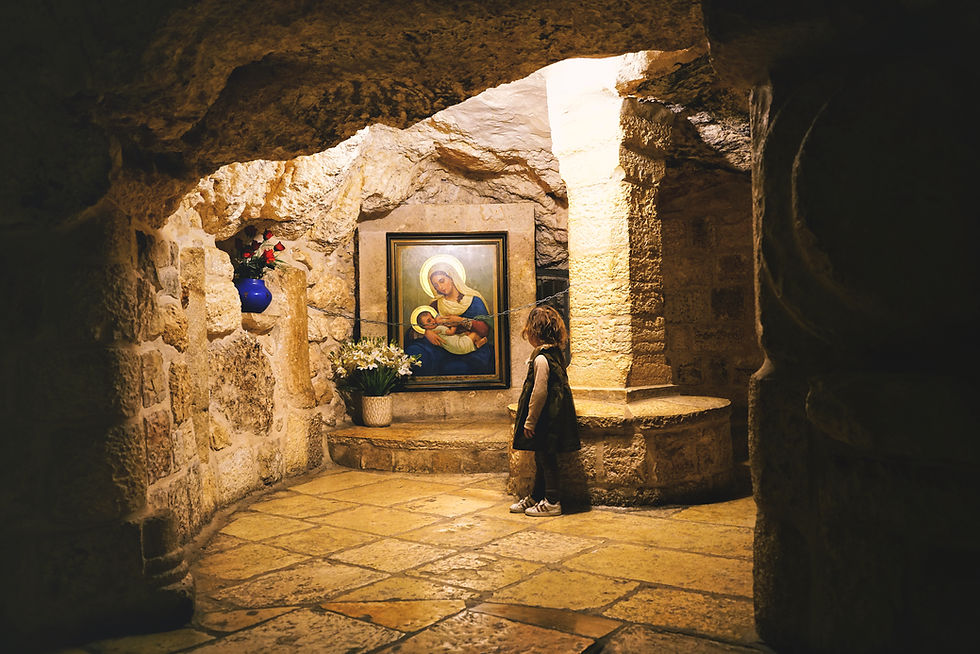
Bethlehem has changed much since the days of the Jesus’ birth. What was once a quiet, sleepy village has become a bustling center of tourism. Inside the Church of the Nativity, different traditions compete over small sections of the building, each connected to the spot where Jesus is believed to have been born. Standing there was honestly challenging to imagine the town as it once was. The stable where Jesus was born may have been beneath a house or carved into the hillside, perhaps one of the rock-cut caves commonly used for livestock in those days.
It was a striking contrast: on one hill, a mad king moved mountains of dirt to build a monument to his own ego; and just a few miles away, the King of Kings was born in a cave, hidden away in the quiet humility of the earth. Herod built high to be seen by all, yet his palace is a ruin; Jesus started low in the shadows, yet His kingdom has no end.
"He has brought down rulers from their thrones but has lifted up the humble." - Luke 1:52


Thank you for reading the story.
If you enjoyed this story and want to read all the newest stories, please subscribe to Into Far Lands and join the family!
More Stories from Far Lands

Part 2 of 'East of Eden'

A Father's welcome in Haghpat, Armenia
.jpg)
Story of discovery in the Andes of Peru.